How We Reduced a Client’s Cloud Bill by 98.6% Overnight: A FinOps Case Study
In today’s rapidly evolving tech landscape, managing cloud infrastructure costs efficiently is just as critical as building innovative products. One of the biggest challenges enterprises face is the growing expense of running complex stacks that may not always be fully necessary for their business needs. This was precisely the situation with a client running a full Discourse forum stack, blowing through hundreds of dollars a month on cloud bills. However, a simple yet powerful question sparked a transformation that cut costs by a staggering 98.6% overnight.
Background: A Fully Loaded Discourse Stack at High Cost
The client was operating a complete Discourse environment deployed using Kubernetes, backed by PostgreSQL for storage, Redis caching, Application Load Balancers (ALB), scheduled backups, and more. The total monthly cost was approximately $701. Here is how the expenses broke down:
- EC2 on-demand worker nodes: ~ $280
- RDS on-demand multi-AZ Postgres: ~ $190
- ElastiCache Redis: ~ $49
- EKS control plane: ~ $74
- ALB: ~ $18
- EBS storage and snapshots: ~ $50
- Logs and monitoring: ~ $40
This infrastructure was engineered to power a fully functional discussion forum. However, the discussions feature of Discourse was actually disabled, meaning users didn’t engage in any dynamic forum discussions.

The Pivotal Question: Do We Need a Forum Engine At All?
This critical question shifted the entire perspective: “Do we even need a forum engine to serve this information?” Instead of maintaining a live, stateful discussion platform, could the content be served more simply, efficiently, and cheaply?
Often during FinOps assessments, the most powerful savings come from questioning fundamental assumptions and usage patterns instead of just optimizing the same architecture.
The Solution: Simplifying with Static Site Generation & Cloud Storage
Export Content to Markdown and Use MkDocs
The content from the Discourse forum was exported to Markdown format—a lightweight markup language easy to manage and convert to static sites.
Then, MkDocs, a static site generator geared towards project documentation, was used to build a fast, static HTML site from the Markdown files.
mkdocs build
MkDocs offers many benefits such as simple configuration, built-in search, and aesthetically pleasing themes tailored for documentation and content presentation.
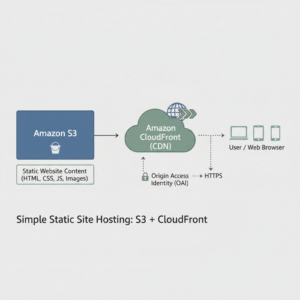
Host on Amazon S3 Behind CloudFront
The static site was hosted on Amazon S3, a highly durable and extremely low-cost object storage service.
To optimize content delivery and reduce latency worldwide, Amazon CloudFront—a global CDN—was configured to serve the site content efficiently.
Update DNS Settings
The existing domain’s DNS settings were updated to point to the CloudFront distribution, ensuring seamless user access with minimal changes.
Cost Comparison: Before and After
Here’s the breakdown of monthly cloud spend before and after the migration:
| Before | Cost (USD) |
|---|---|
| EC2 on-demand worker nodes | $280 |
| RDS on-demand Postgres (multi-AZ) | $190 |
| ElastiCache Redis | $49 |
| EKS control plane | $74 |
| ALB | $18 |
| EBS and snapshots | $50 |
| Logs and monitoring | $40 |
| Total | $701 |
| After | Cost (USD) |
|---|---|
| S3 storage and requests | $1 – $2 |
| CloudFront egress (100 GB) | $8 – $9 |
| Route 53 DNS | $0.50 |
| Total | ≈ $10 |
The new solution is approximately 70 times cheaper, a 98.6% reduction in monthly cloud costs, slashing the bill from around $701 to just $10.
The Benefits Beyond Cost Savings
- Fewer Moving Parts: No Kubernetes clusters, pods, or complex orchestration to manage.
- Faster Deployments: Static sites build quickly without database migrations or backend reconfiguration.
- Reduced Operational Overhead: No databases to patch or Redis nodes to monitor.
- Improved Reliability: Static hosting on S3 and CloudFront is highly scalable and reliable by design.
Actionable Insights for Your FinOps Strategy
If you’re running expensive infrastructure for content presentation that doesn’t require dynamic functionality, consider these steps:
- Audit your current usage: Identify if active discussions or dynamic features are essential.
- Export content: Find ways to convert your existing data into static formats such as Markdown.
- Adopt Static Site Generators: Tools like MkDocs, Hugo, or Jekyll can help simplify content delivery.
- Leverage Cloud-native Static Hosting: Services like S3 + CloudFront combine cost efficiency with global performance.
- Update DNS and Caching: Ensure users access the new sites without disruption.
Taking a critical look at “what do we actually need?” can be the foundation of effective FinOps—reducing cloud waste while maintaining or even improving user experience.
Conclusion: FinOps Means Thinking Outside the Box
This case study is a perfect example of how FinOps is not just about managing budgets but also about innovating cloud strategies. By stripping down unnecessary complexity and focusing on core needs, businesses can slash costs, improve reliability, and reduce operational overhead.
If you’re overpaying for overengineered solutions or want to optimize your cloud spend, remember that sometimes the best solution is simpler and smarter.