
Harnessing the Power of Microsoft Agent Lightning for Reinforcement Learning in AI Agents
In the evolving landscape of artificial intelligence (AI), the ability to efficiently train AI agents is crucial for building smarter, more responsive systems. Microsoft has introduced a groundbreaking open-source framework called Agent Lightning, designed to simplify and optimize the training of AI agents using reinforcement learning (RL). This framework integrates seamlessly with multiple popular AI development tools, making sophisticated reinforcement learning accessible to a broader audience.
What is Microsoft Agent Lightning?
Agent Lightning is a versatile open-source framework that facilitates the training of AI agents using reinforcement learning and other optimization techniques. Its key strength lies in its compatibility with a wide range of major AI frameworks including LangChain, AutoGen, CrewAI, the OpenAI SDK, or even plain Python scripts. This flexibility means developers can enhance their existing AI systems without having to overhaul their infrastructure.
How Does Agent Lightning Work?
Simple Integration with Your Agent
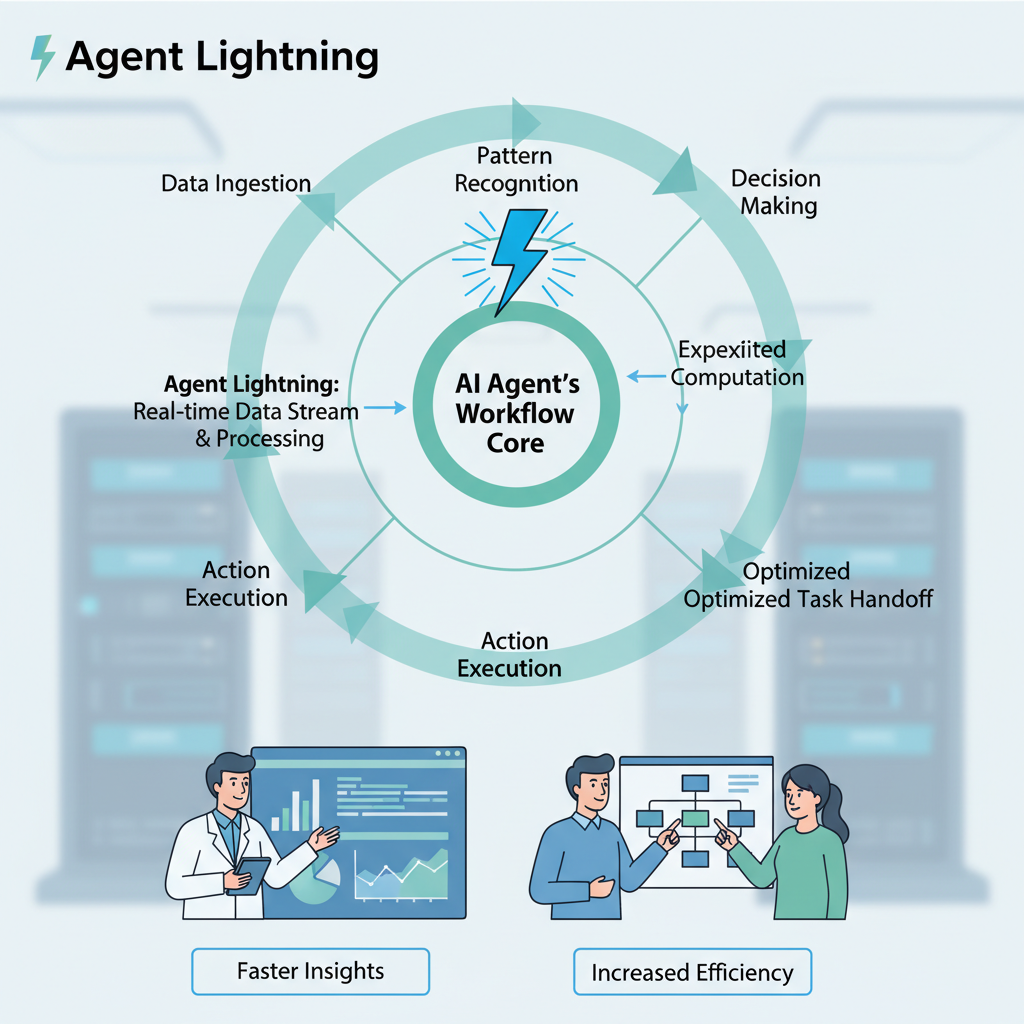
To start using Agent Lightning, you only need to add a small function call, agl.emit(), to your agent’s code. If you prefer a hands-off approach, the built-in tracer can automatically capture all relevant data during your agent’s operation. This includes all prompts, tool calls, and reward signals received by the agent.
Recording and Structuring Interaction Data
Agent Lightning meticulously records every interaction your agent has during its operation, storing the data in a structured format. This comprehensive log serves as the foundation for the next phase — training and optimizing the agent’s performance.
Choosing an Optimization Algorithm
Once the interaction data is collected, you can select from multiple optimization strategies:
- Reinforcement Learning (RL): Allows the agent to improve its decision-making through reward-based learning.
- Prompt Optimization: Enhances the prompts used by your agent to achieve better responses.
- Fine-tuning: Adjusts the agent’s underlying models for improved task-specific performance.
Training and Deployment with the Trainer Module
The Trainer module reads the collected data and applies the chosen learning algorithm to discover patterns that lead to better agent behavior. It then generates improved prompts or policy updates and automatically applies them back to your agent without any manual code rewrite. This streamlines the iteration process, saving development time and reducing the risk of introducing new bugs.
Advanced Feature: Multi-Agent System Optimization
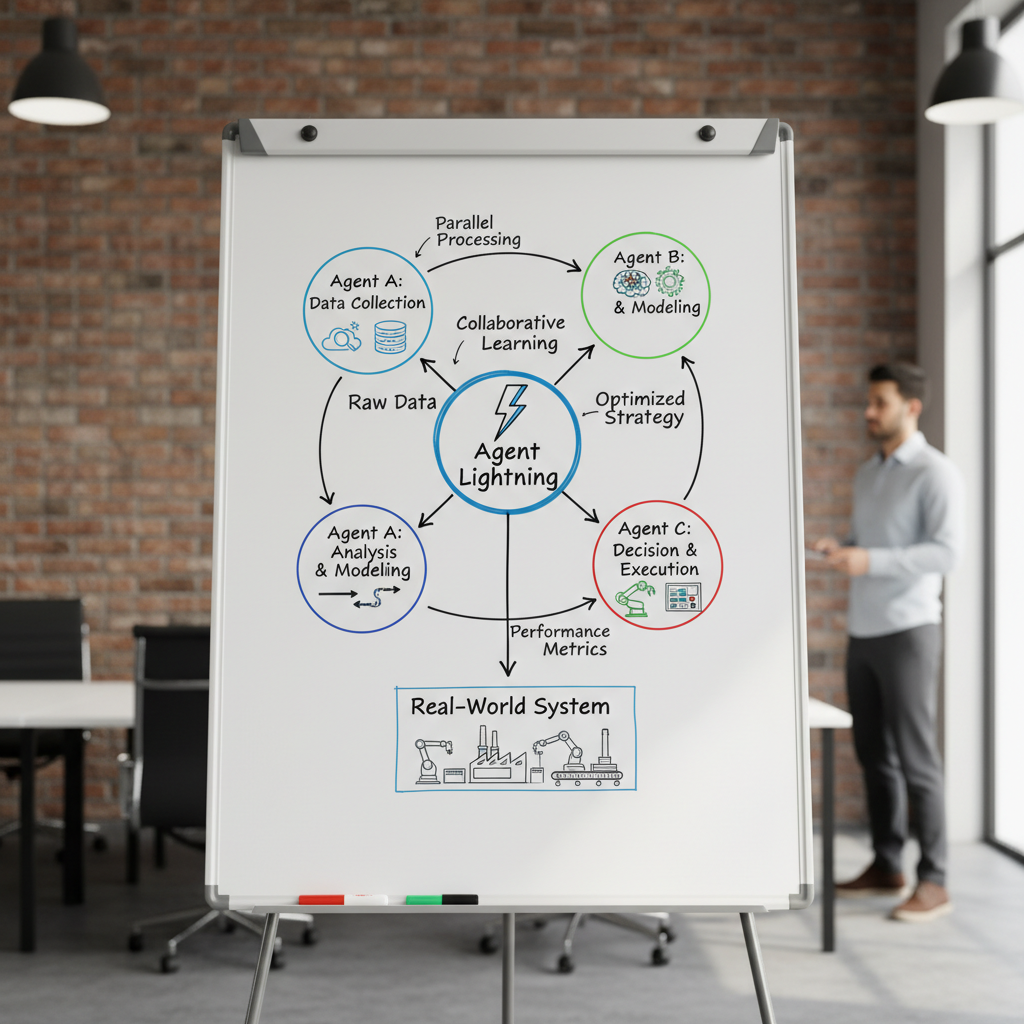
For projects involving multiple AI agents, Agent Lightning offers the capability to optimize each agent independently within a multi-agent environment. This enables more effective coordination and specialization among different agents, resulting in a more powerful and intelligent system overall.
Why Use Agent Lightning?
Here are several compelling reasons to adopt Agent Lightning for your AI development:
- Framework Agnostic: Works with a variety of existing tools and languages, ensuring easy integration.
- Automated Data Capture: Simplifies collecting interaction data crucial for training without manual intervention.
- Multiple Optimization Methods: Supports different learning techniques catering to diverse use cases.
- Seamless Update Process: Automatically improves your agent without the need for manual code changes.
- Open-Source: Community-driven with transparency and flexibility for customization.
Getting Started with Agent Lightning
Jumpstart your AI agent optimization by visiting the official Microsoft Agent Lightning repository on GitHub: https://github.com/microsoft/agent-lightning. The repository includes comprehensive documentation, examples, and guides to help you integrate and leverage the framework effectively.
Conclusion
Microsoft’s Agent Lightning is a powerful tool that democratizes reinforcement learning and AI agent optimization. Its simplicity, flexibility, and multi-agent capabilities make it a must-have for developers looking to enhance AI functionalities efficiently. By leveraging this framework, developers can accelerate the learning cycle of AI agents, achieve better performance, and create more intelligent systems with less effort.
Start integrating Agent Lightning today to unleash the full potential of your AI agents and stay ahead in the fast-paced AI innovation journey.